How TechX Pakistan is documenting a country learning to build, adopt, and question technology
Posted 10 hours ago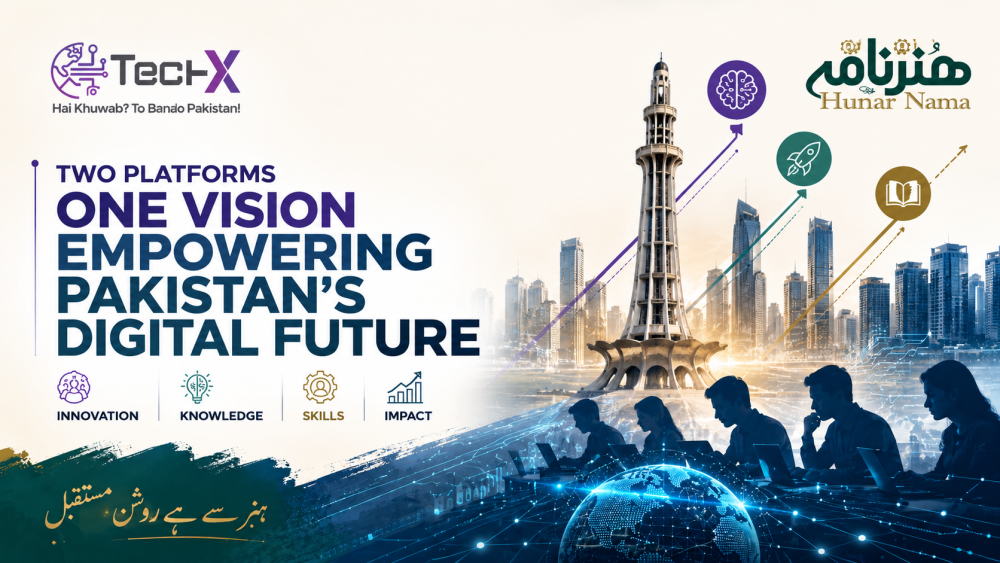
192/2026
Founded in 2019, TechX began as a technology and social-blogging initiative and has since evolved into a broader digital media platform covering technology, startups, finance, development, digital marketing, cryptocurrency, education, smart devices, and emerging industries. Its stated ambition goes beyond reporting what happened: it aims to connect Pakistan's technology story with a global audience.
TechX coverage spans artificial intelligence and software, startups, venture capital, fintech, cybersecurity, education, and electric vehicles. That breadth reflects an important reality: technology is no longer a separate sector of the economy.
Strengthening the startup laboratory
Pakistan's technological future will depend on entrepreneurs who can turn problems into businesses. Here, too, TechX has increasingly focused on the country's startup ecosystem. Its current coverage includes venture capital, fintech regulation, startup funding, founders, and emerging companies. Recent stories have examined everything from a proposed SECP venture-capital framework to regulatory sandboxes and new investment activity. This coverage matters more than celebrating successful startups.
Techno entrepreneurship is like a scientific experiment
A founder proposes an idea. Investors provide resources. Customers test the product. Markets reject some ideas and reward others. When a technology publication documents that process, it creates a record of how an innovation ecosystem develops.
Pakistan's startup story therefore deserves to be viewed not merely through the number of companies founded or dollars invested, but through the skills, institutions, infrastructure and confidence being built around them.
AI changes the questions.
TechX's recent reporting on sovereign AI infrastructure illustrates this shift. Its coverage of a locally hosted, GPU-powered AI cloud points to a broader debate over digital sovereignty: whether nations should have greater control over the computing infrastructure and data their economies increasingly depend on. That debate will grow in importance.
The next technological divide may not simply be between countries with internet access and those without. It could be between countries that control critical digital infrastructure and those that remain dependent on it.
A bridge between Pakistan and the world
TechX's coverage of events such as GITEX, LEAP, ITCN Asia and the World CIO 200 Summit reflects an effort to place Pakistani innovators within a much larger global conversation. Its site documents extensive event coverage and describes partnerships with major technology gatherings.
This matters because innovation thrives on connections.
A Pakistani startup founder needs access to global customers. A student needs exposure to international opportunities. An investor needs information about emerging markets. A policymaker needs to understand what other countries are doing.
Digital media can provide part of that connective fabric.
A story published in Pakistan can reach a reader in Dubai, London, Singapore or Silicon Valley within seconds. In that sense, technology journalism itself has become a form of infrastructure.
Beyond the screen
Another reason platforms such as TechX matter is this. Technology is often discussed in the language of machines: processors, algorithms, networks and applications. But the ultimate subject is human beings. Everybody wants to know evolutionary aspects when:
- A smartphone changes how a family communicates.
- Digital banking changes how a small business receives money.
- AI changes how a student learns.
- An electric vehicle changes how a city thinks about transportation.
- A startup changes how a young graduate imagines a career.
Technology journalism sits at the intersection of these changes. Its responsibility is therefore not simply to be fast, but to make complicated developments understandable. That is particularly important in a country with a young population and enormous demand for digital skills.
The next challenge: from information to understanding
TechX's evolution also points to a broader challenge facing technology media everywhere. The internet has solved the problem of access to information. It has not solved the problem of understanding. Millions of technology stories are published every day. Yet readers increasingly need help distinguishing genuine breakthroughs from marketing hype, promising startups from speculative ideas, and meaningful AI progress from exaggerated claims.
The future of technology journalism will therefore belong to publications that can balance speed with context, accessibility with accuracy, and enthusiasm with skepticism.
Pakistan needs that kind of journalism.
A country writing its digital story
Pakistan's technology transformation is still unfolding. Its chapters include startups seeking global markets, universities developing new skills, entrepreneurs experimenting with AI, businesses moving toward digital platforms, policymakers attempting to regulate emerging technologies, and millions of ordinary citizens adapting to an increasingly connected world. TechX Pakistan is documenting many of those chapters as they unfold.
A technology publication is not merely a mirror reflecting the present. At its best, it becomes a window through which society can see what is coming and a lens through which it can decide what that future should look like. For Pakistan, that conversation has never been more important. The digital revolution is already here.
The question is no longer whether Pakistan will participate. The question is what kind of technological nation it chooses to become.
According to HunarNama, TechX Pakistan deserves recognition as an important and energetic voice in Pakistan’s rapidly evolving technology ecosystem. Its broad coverage of emerging technologies, startups, artificial intelligence, digital transformation, and innovation helps make complex developments accessible to a wider audience. It brings Pakistan’s technology story into a global conversation. At a time when technological literacy is becoming as important as traditional education, platforms such as TechX play a valuable role in informing young people, entrepreneurs, professionals, and policymakers about the opportunities and challenges ahead.
HunarNama, whose mission is to serve as a “Lighthouse for Contemporary, Emerging Technologies & Associated Skills,” particularly appreciates TechX Pakistan’s contribution to strengthening the culture of technology awareness and skills in the country.