Catching Fake Science and Scientists through Social Media
Posted 7 months ago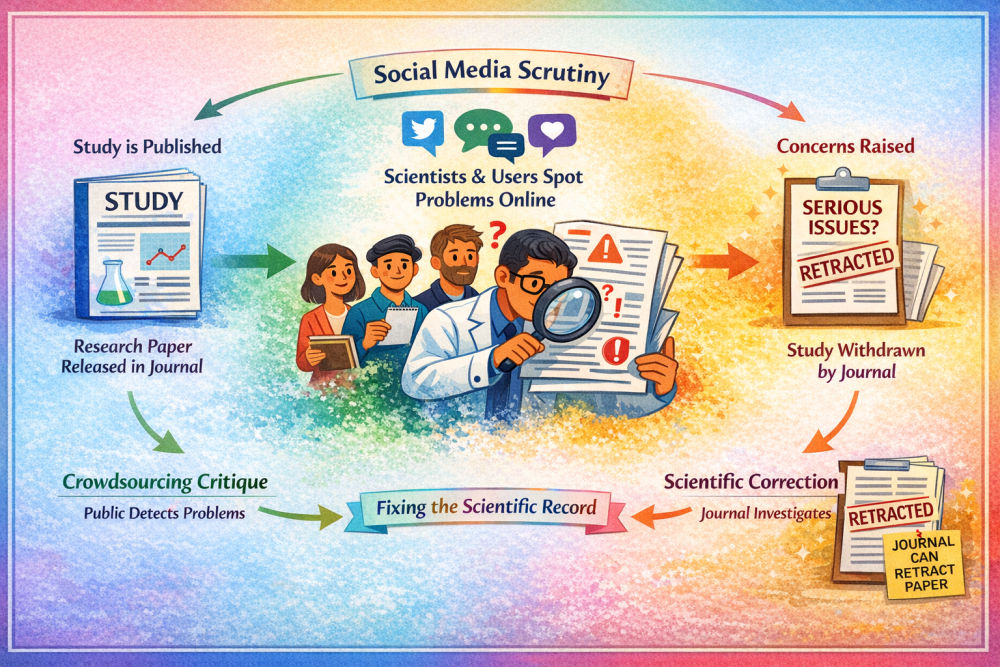
17/2026
In scientific research, peer review has long been the gold standard for accuracy, but social media's role in scrutinizing research is now gaining recognition for its impact on scientific validation.
A recent report in Nature journal highlights how posts on platforms like X (formerly Twitter) can act as an early warning system for research problems, sometimes even before journals recognize them.
A New Role for Social Platforms
Researchers and commentators are now using social feeds to discuss papers after their publication. This public engagement can make readers feel their input is meaningful, encouraging active participation in maintaining scientific standards.
Many of these public discussions, happening outside formal peer review, involve not just scientists but also students, journalists, and watchdogs, adding a significant crowdsourced layer to scientific validation.
Why This Matters?
Science relies on trust. When researchers publish results, especially in prominent journals, the scientific community usually considers those results credible. However, mistakes can still occur. Sometimes they are honest errors, and other times they raise serious questions about the quality or integrity of the work. When errors pass peer review, they can mislead other scientists, waste resources, or even influence public policy.
Highlighting problematic studies, social media criticism can motivate journals and authors to examine their work more quickly, fostering a sense of trust that the scientific community actively corrects itself.
The Power and Limits of Online Scrutiny
While social media offers valuable insights, online debates can be heated or influenced by personalities, highlighting the platform's limitations in ensuring factual accuracy in scientific discussions.
Still, in scientific publishing, these public discussions are proving to be a valuable addition to formal review, helping to identify issues that might otherwise be missed. The Nature report indicates that this kind of collective scrutiny could become a key part of how science self-corrects in the digital age.
Benefits to Science and Socity
For scientists, this trend highlights the need for transparency and thorough methods. For the public, it demonstrates that social media, often criticized for spreading misinformation, can also be a tool for accountability in science.
In a world where research influences everything from medicine to climate policy, having more eyes on published work outside traditional systems can help maintain the integrity and reliability of science.