University of South Asia Brings AI to Pakistan’s Classrooms; USP Rector Welcomes Initiative, Urges Faculty Readiness
Posted 10 hours ago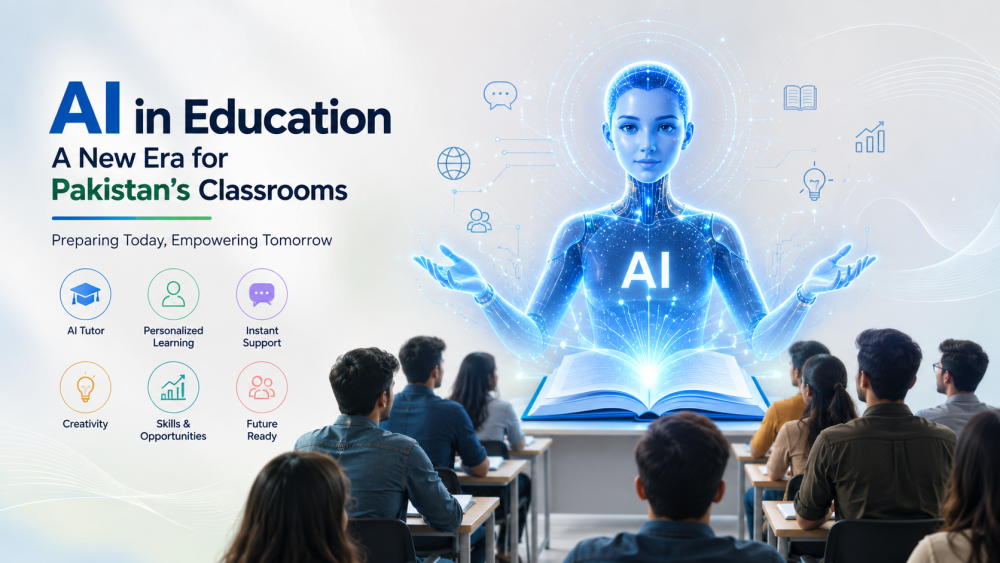
194/2026
Pakistan’s higher-education landscape is undergoing a significant technological shift with the upcoming national launch of Maya AI, Voice-7 AI, Persona AI, Pixel AI, Motion AI, and Adam AI at the University of South Asia (USA) in Lahore.
The introduction of Maya AI as “Pakistan’s First AI Tutor” reflects a broader transformation already underway in education. AI systems can provide students with instant explanations, personalized learning support, language support, feedback, and opportunities to practice at their own pace.
Scheduled for September 5, 2026, the event is presented as a major step toward demonstrating how artificial intelligence can transform learning, creativity, and professional capabilities, while helping Pakistan build skills, create opportunities, and prepare for emerging jobs.
The launch, with HEC Chairman Dr. Niaz Ahmad Akhtar as Chief Guest, PHEC Chairman Dr. Iqrar Ahmad Khan, and Consul General of China H.E. Sun Yan as Guests of Honor, comes at a time when universities worldwide are grappling with a fundamental question: Will AI replace traditional education or redefine it?
USP Rector welcomes the initiative
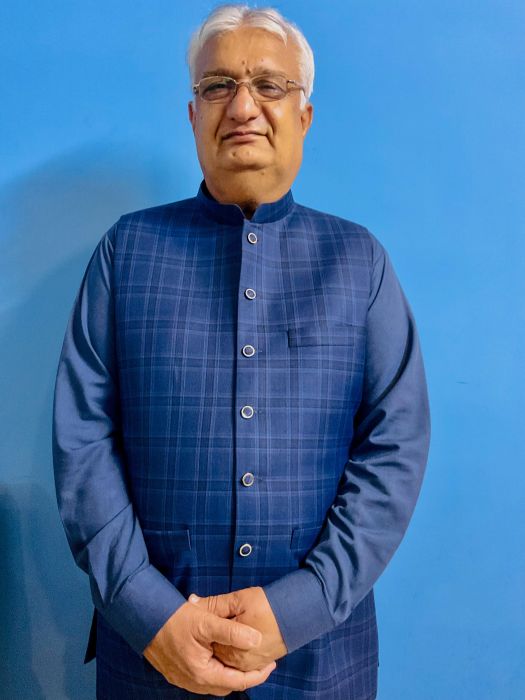
Welcoming the initiative, the Rector of the University of Southern Punjab (USP), Multan, Pakistan, praised the University of South Asia’s efforts to introduce AI-powered educational technologies to Pakistan’s academic environment.
He said the initiative is a timely recognition of the profound transformation taking place in education and the workplace.
“The University of Southern Punjab welcomes every serious effort that helps Pakistan understand, adopt and responsibly use artificial intelligence. The AI revolution is no longer a distant possibility; it is already changing the way knowledge is created, delivered and applied.”
The USP Rector emphasized that universities should approach AI neither with fear nor with blind enthusiasm, but with preparedness, responsibility, and strategic vision.
“I would particularly advise faculty members and academic leaders across Pakistan to prepare for the incoming revolution. Teachers who understand AI will be much better positioned to guide their students, redesign their courses, and prepare graduates for a rapidly changing job market.”
He added that the objective should not be to turn education into a machine-driven exercise.
“Our goal should be human intelligence amplified by artificial intelligence, not human intelligence replaced by it. The universities that succeed will be those that combine technological capability with critical thinking, ethics, creativity, and the wisdom of experienced educators.”
Real competition is readiness.
The launch of AI platforms may ultimately prove more significant than the individual technologies being introduced.
Pakistan has a young population and a large higher-education system. If universities integrate AI responsibly into teaching, research, administration, and professional training, the country could use the technology to improve productivity and equip graduates with the skills demanded by the emerging global economy.
But that opportunity will not materialize automatically.
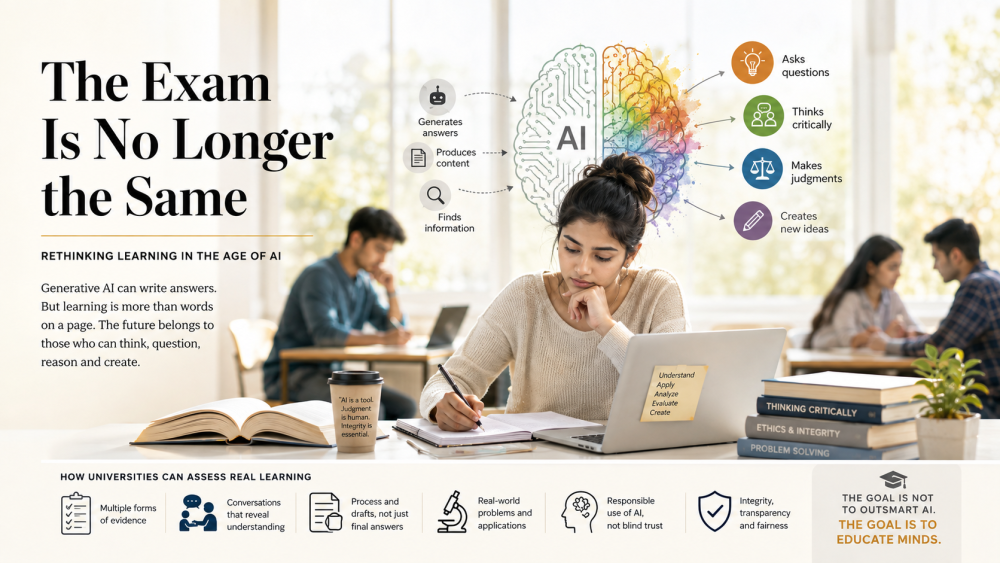
Universities need AI literacy programs for faculty, clear policies on responsible AI use, updated curricula, assessment methods that reward genuine understanding, and strong attention to data privacy and academic integrity. He particularly praised the Higher Education Commission of Pakistan for introducing mandatory AI literacy at the undergraduate level.
Most importantly, faculty members must begin experimenting with AI rather than waiting for students to become more familiar with it than their teachers.
A wake-up call for higher education
The upcoming launch in Lahore is therefore more than a technology event. It is a reminder that the boundaries among education, technology, and employment are rapidly disappearing.
The question facing Pakistani universities is no longer whether students will use AI. They almost certainly will.
The more important question is whether their teachers and institutions will be prepared to guide them.
Universities that prepare early could turn AI into an extraordinary educational advantage. Those that ignore it may find themselves trying to catch up in a world where the rules of learning and work have already changed.
The AI revolution is coming to Pakistan’s classrooms. The time for faculty to prepare is now.