Repositioning Pakistani Universities for a Changing Job Market – Expectations from Prof. Dr. Niaz Ahmad Akhtar
Posted 7 months ago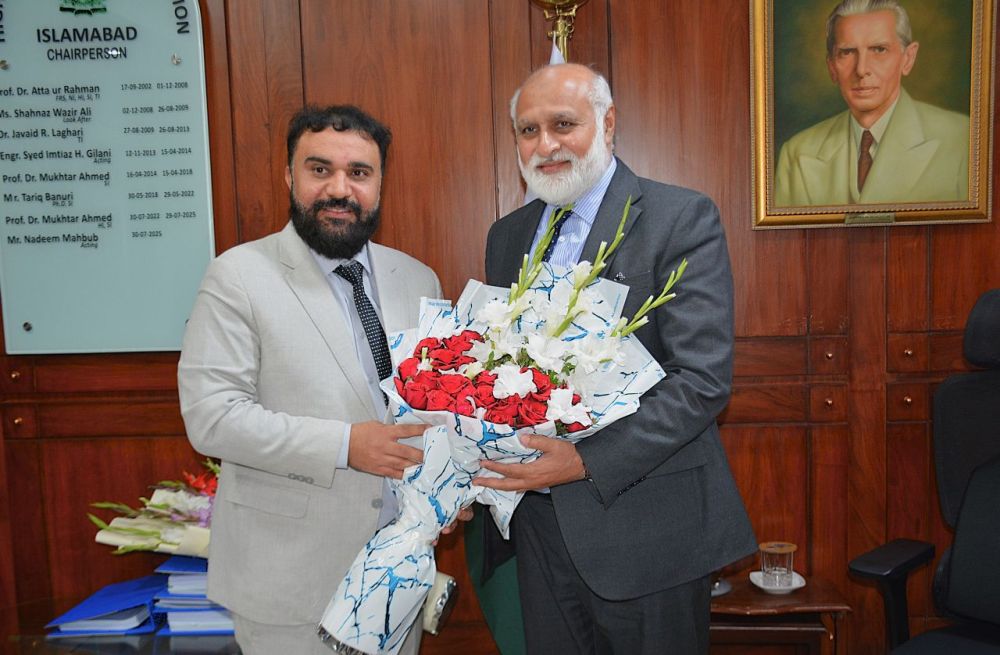
22/2026
When Prof. Dr. Niaz Ahmad Akhtar took charge as chairman of the Higher Education Commission (HEC) Pakistan on February 6, 2026, he stepped into a role at the center of a national debate about the future of higher education in Pakistan. This debate is shaped by limited budgets, inconsistent institutional quality, and an urgent need to make universities drivers of jobs, innovation, and social mobility. The warm welcome he received from Prof. Dr. Zia Ul Haq, the newly appointed Executive Director of the HEC Secretariat, marked the start of a vital partnership within the organization that oversees Pakistan’s higher education system. Their collaboration follows months of leadership gaps at HEC and comes at a time when the country’s universities critically need stable governance along with meaningful reforms.
This appointment is more than just ceremonial. HEC oversees recognition and quality assurance for hundreds of degree-granting institutions, manages central funding streams, and supports research and human resource development nationwide. Pakistan’s higher education system comprises over 200 universities and degree-awarding institutions that have grown rapidly since the early 2000s but still vary in quality and resources. The HEC’s own reports and historical summaries highlight both the progress made (such as library access, increased enrollment, and higher research outputs) and the remaining gaps in equitable access, faculty development, and international competitiveness.
Credentials that matter: experience, scholarship, and system knowledge
Prof. Dr. Niaz Ahmad Akhtar brings a wealth of academic leadership experience to the chairmanship. A recipient of the Sitara-i-Imtiaz and former vice-chancellor of Quaid-i-Azam University, Punjab University, and several others, he is well known in Pakistan’s higher education community for his expertise in institutional management and for his advocacy of research-based universities. His public comments upon taking office highlight immediate reforms, such as a proposed Graduate Employment Cell and initiatives to enhance teaching and student skills, to address labor-market concerns, and to reflect HEC’s expanding role beyond accreditation into employment and relevance.
Equally important is Prof. Dr. Zia Ul Haq, who serves as Executive Director, the senior operational leader overseeing HEC's daily operations. A public health expert and former vice-chancellor of Khyber Medical University, Prof. Dr. Zia brings experience in managing complex academic health institutions, grant systems, and faculty development programs. His operational expertise in grant disbursements, quality assurance processes, and the Research & Development divisions will be vital for turning the chairman’s strategic vision into measurable programs.
Where the partnership can make a real impact - facts, figures, and priorities
To understand the scope of the challenge (and the opportunity), a few key facts are important:
- Pakistan’s higher education sector has expanded rapidly since 2002; enrollment and degree-granting institutions grew significantly during earlier HEC-led reforms, and research publications increased from low hundreds annually to several thousand by the late 2000s. However, international rankings and per capita research productivity still lag behind regional peers.
- Budgetary volatility is a real issue: after a contentious period in 2024–25 when HEC’s recurring budget was sharply reduced and then partially restored, stable funding remains a key policy priority for long-term planning. The restoration of funding for recurring budgets during 2024–25 highlighted how sensitive universities are to central allocations.
- HEC’s Annual Report and data repositories serve as the operational guide for interventions, from faculty development metrics to the number of accredited programs across provinces, and should be the baseline for any reform initiatives.
A key test for the new leadership at the Higher Education Commission will be whether Pakistan’s universities can move beyond superficial enthusiasm for artificial intelligence and towards its disciplined, system-wide adoption. Generative AI tools capable of producing text, code, designs, and data analysis are already transforming how knowledge is created and used worldwide. According to McKinsey estimates, generative AI could add trillions of dollars to the global economy each year, mainly by boosting professional and technical work. For Pakistan, the stakes are even higher: universities must ensure that graduates are not just users of AI tools but critical thinkers who understand their limitations, ethical issues, and domain-specific uses. This requires integrating AI literacy across disciplines—from engineering and medicine to social sciences and humanities—rather than limiting it to computer science departments alone.
Equally transformative is the rise of agentic AI systems that do not merely respond to prompts but can plan, execute tasks, coordinate with other systems, and learn from feedback. If deployed wisely, agentic AI can modernize university administration and research ecosystems by automating grant management, assisting with curriculum mapping, optimizing research workflows, and supporting personalized student advising at scale. For HEC, the opportunity lies in setting national guardrails — ethical standards, data governance frameworks, and accreditation guidelines — while piloting AI-enabled governance within its own operations. A coordinated strategy, jointly led by the chairman and the executive director, could position Pakistan as a responsible adopter rather than a passive consumer of AI, ensuring that universities produce graduates ready for an economy where human judgment increasingly works alongside intelligent systems, rather than in competition with them.
A Practical Roadmap for the New HEC Proposed by the Generative AI
Below are concrete, actionable recommendations grounded in the scale and structures of Pakistan’s higher education system, each with an operational rationale.
1. Stabilize and transparently protect recurring funding while diversifying revenue streams.
Rationale: Institutional planning (hiring, PhD scholarships, labs) needs predictable multi-year funding. HEC should negotiate multi-year memoranda with the Finance Division and pilot revenue diversification (endowments, technology licensing, continuing education) at 10 anchor universities to decrease reliance on annual budget fluctuations. (Evidence: past budget rollbacks harmed program continuity.)
2. Make research output a balanced portfolio - prioritize quality over raw quantity. Rationale: Support thematic national centers of excellence (e.g., public health, climate-resilient agriculture, digital manufacturing) that involve multi-institutional consortia and international partners. Provide incentives for high-impact, reproducible research and open data. Use HEC’s research funding to develop competitive, peer-reviewed grants focused on translation and industry collaboration. (Evidence: past increases in publication numbers need to be complemented with measurable impact and translation.)
3. Standardized faculty development and PhD training with clear KPIs.
Rationale: Faculty mainly contribute to quality teaching and research. Expand national postdoctoral fellowships, visiting scholars’ programs, and accelerated faculty development linked to institutional performance agreements. HEC’s Human Resource Development division should set annual targets (number of PhDs trained, postdocs placed, faculty promotions by merit).
4. Align curricula with the job market by expanding the proposed Graduate Employment Cell into a nationwide jobs-linkage network.
Rationale: Graduates need pathways to industry and entrepreneurship. Establish regional industry advisory boards, standardize internship credits, and incorporate employability as a performance metric in accreditation reviews. (Prof. Dr. Niaz’s intent to propose a Graduate Employment Cell is a timely initiative.)
5. Enhance governance and transparency with data dashboards.
Rationale: Launch an open HEC dashboard displaying real-time metrics on funding flows, program accreditations, research grants, and student outcomes. This will build trust, help provincial governments and universities plan better, and boost accountability. HEC’s Higher Education Data Repository already exists and should be turned into a public-facing performance portal.
6. Promote regional balance and the Global South agenda.
Rationale: Pakistan must bridge urban-rural and provincial gaps in faculty and research infrastructure. Focus on seed infrastructure grants for public universities in underserved provinces and encourage faculty rotations and joint appointments across provinces. This aligns HEC with national cohesion and human-capital objectives.
7. Institutionalize digitalization in higher education to improve access, quality, and resilience.
Rationale: Digital transformation is essential for Pakistan’s universities. HEC should lead a unified national strategy for digital education by expanding shared learning management systems, virtual laboratories, hybrid degree policies, and faculty training in digital teaching methods. A centralized national digital platform, built on current HEC initiatives, can host online courses, micro-credentials, and credit transfer systems across public and private universities. Digitalization will increase access for students in remote areas, lower delivery costs, ensure academic continuity during disruptions, and align Pakistan’s higher education system with global teaching, research, and assessment standards.
Why HEC Leadership Matters?
HEC operates where academia, politics, and public finance intersect. The chairman provides vision and political influence; the executive director offers managerial strength. If Prof. Dr. Niaz leverages his academic credibility to build consensus with vice-chancellors and ministries, and if Prof. Dr. Zia applies his operational skills to implement transparent, merit-based processes, the partnership can institutionalize reforms that benefit the system. Civil society, industry, and international donors will be more willing to support programs that set clear targets and demonstrate early successes.
A Pragmatic Optimism
Any meaningful reform at the Higher Education Commission must also be rooted in institutional memory, and few chapters are more significant than the era shaped by Prof. Dr. Atta-ur-Rahman, the founding architect of Pakistan’s modern higher-education framework. Under his leadership in the early 2000s, HEC oversaw an unprecedented expansion of universities, doctoral training, digital libraries, and research funding, helping to elevate Pakistan’s global research visibility from near obscurity into international databases. While the model faced some critics, its key lesson remains lasting: bold vision, supported by political backing and administrative independence, can quickly change the course of a national academic system. That foundational goal of treating higher education as strategic national infrastructure remains a guiding principle for today’s leadership.
Subsequent custodians refined that legacy. Prof. Dr. Javaid Laghari emphasized governance reforms, quality assurance, and institutional accountability during a period when expansion required consolidation. Alongside him, the quiet yet impactful administrative leadership of Prof. Dr. Sohail Naqvi showed how operational discipline, transparent grant management, standardized evaluation systems, and international engagement could turn policy into results. Together, these former leaders offer a lesson for the current chairman and executive director: transformative reform requires both intellectual daring and managerial discipline. For Prof. Dr. Niaz Ahmad Akhtar and Prof. Dr. Zia Ul Haq, this legacy is not a blueprint to copy but a guiding light reminding them that Pakistan’s higher education system advances most when vision, execution, and institutional continuity are intentionally aligned.
The legacy of Dr. Sohail Navi was prompt communication. He used to leave the office after returning phone calls or e-mails received from the Vice Chancellors' colleagues or students that day. All academic leaders during his tenure as the Executive Director praised this quality.
Leadership changes are always a moment of possibility. Prof. Dr. Niaz Ahmad Akhtar’s arrival as chairman, together with Prof. Dr. Zia Ul Haq as executive director, creates a pairing of public credibility and administrative competence. If they act quickly to stabilize budgets, improve research quality, advance faculty development, and enhance graduate employability, and if they make transparency and measurable outcomes the currency of reform, Pakistan’s universities can move from episodic achievement to systematic excellence. The coming two years will test whether vision and operational discipline can be welded into durable institutional progress for the nation’s higher education system.
Heartfelt congratulations to Prof. Dr. Niaz Ahmad Akhtar. We wish him every success as he undertakes the noble responsibility of guiding our higher education system toward excellence. May Allah grant him wisdom, strength, and continued success.