How Sodium-Ion Batteries Could Change the World?
Posted 1 month ago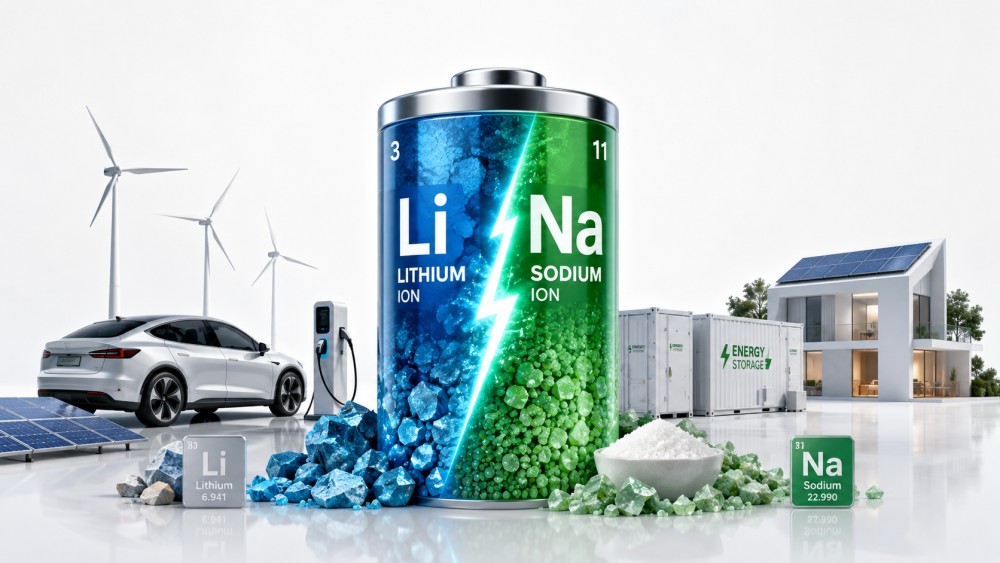
145/2026
For more than three decades, lithium-ion batteries have powered the modern world. They power our smartphones, laptops, electric vehicles, and increasingly, the power grids that store renewable energy. But as demand for batteries skyrockets, scientists and engineers are asking an important question: What comes after lithium?
A growing number of researchers believe the answer could be sodium-ion batteries.
At first glance, sodium may seem an unlikely contender. It is the same element found in table salt. Yet it is one of the most abundant elements on Earth, making it far cheaper and more widely available than lithium. That abundance could help address one of the biggest challenges facing the global clean-energy transition: producing billions of affordable batteries without relying on scarce mineral supplies.
Why look beyond lithium?
Lithium-ion batteries have transformed technology by storing large amounts of energy in a small, lightweight package. However, they also pose challenges. Mining lithium and other critical metals can be expensive, environmentally demanding, and concentrated in only a handful of countries. As electric vehicles and renewable energy systems expand, securing sufficient raw materials has become a strategic concern for governments and industries worldwide.
Sodium offers an attractive alternative. It is found in seawater and common minerals, so global supplies are plentiful. This could reduce costs and strengthen energy security by reducing dependence on scarce resources.
Not a replacement but a powerful partner
Scientists do not expect sodium-ion batteries to replace lithium-ion batteries fully. Instead, the two technologies are likely to complement each other.
Lithium-ion batteries will likely remain the preferred choice for applications where every gram matters, such as long-range electric cars, smartphones, and laptops, because they generally store more energy per unit of weight.
Sodium-ion batteries, however, could excel in situations where cost, safety, and durability matter more than maximum energy density. These include home energy storage, solar and wind farms, backup power systems, and affordable urban electric vehicles.
Technology is coming of age.
For years, sodium-ion batteries were considered an interesting scientific idea rather than a commercial competitor. Their lower energy density limited their appeal.
That picture is changing rapidly.
Researchers have developed improved electrode materials that enable sodium batteries to store more energy, charge faster, and withstand thousands of charging cycles. Several manufacturers have already begun commercial production of sodium-ion batteries, while major battery companies are investing heavily in further development.
Environmental and economic benefits
Because sodium is abundant and inexpensive, these batteries could make large-scale energy storage more affordable. They also reduce reliance on critical minerals, whose extraction can have significant environmental and geopolitical consequences.
For countries seeking to expand renewable energy, cheaper battery storage could make solar and wind power more reliable by storing electricity when the sun is shining or the wind is blowing and releasing it when needed.
Challenges remain
Sodium-ion technology is not without obstacles. It still stores less energy than the best lithium-ion batteries, so larger batteries may be needed to deliver the same power. Researchers are also working to improve battery lifespan, charging performance, and manufacturing processes before sodium-ion batteries become commonplace across markets.
The bigger picture
History suggests that no single battery chemistry will dominate every application. Just as gasoline, diesel, electricity, and hydrogen each serve distinct transportation needs, future energy systems may rely on multiple battery technologies working in concert.
Lithium-ion batteries are unlikely to disappear anytime soon. But sodium-ion batteries could become an essential partner, particularly for storing renewable energy and providing affordable power where cost matters most.
If these advances continue, the humble element that flavors our food may soon help power our homes, stabilize electric grids, and accelerate the world's transition to cleaner energy. In the race toward a more sustainable future, the next battery revolution may not be built on a rare metal but on one of Earth's most abundant elements.