HEC and Ignite Unveil PKR 45 Billion in Research Funding Opportunities to Accelerate Pakistan’s Innovation and Commercialization
Posted 1 day ago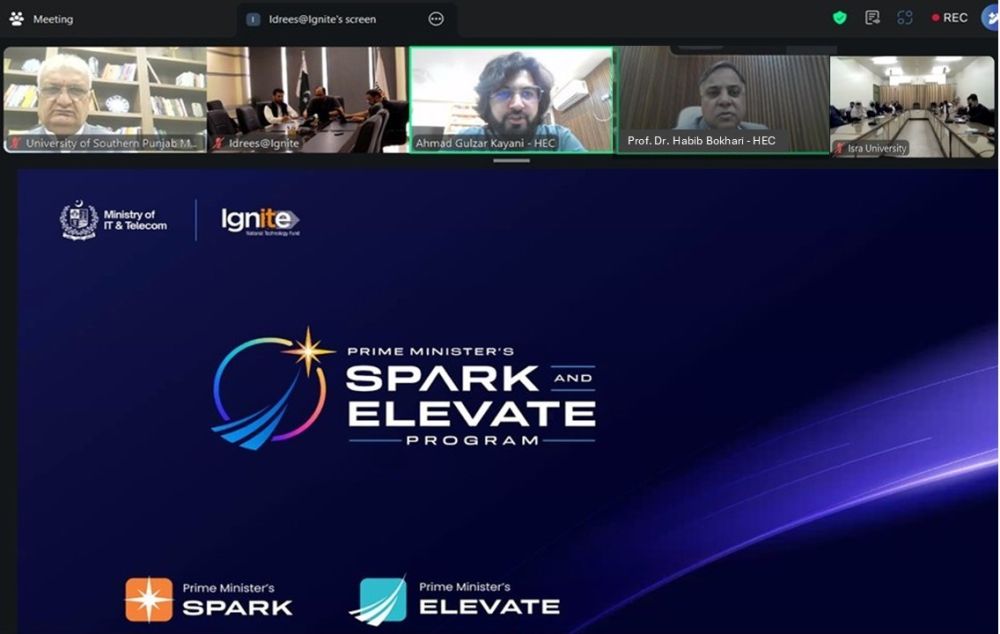
239/2026
SPARK Program offers grants of up to Rs. 100 million for applied research, while ELEVATE Program provides up to Rs. 200 million to transform functional prototypes into market-ready products
In a major push to strengthen Pakistan’s research, innovation, and technology commercialization ecosystem, the Higher Education Commission (HEC) Pakistan and Ignite, National Technology Fund, under the Ministry of Information Technology and Telecommunication, held an awareness webinar introducing two flagship research funding programs, SPARK and ELEVATE, offering researchers, universities, startups, and businesses new opportunities to turn scientific ideas into practical technologies and commercially viable products.
Both programs are designed to bridge the longstanding gap between academic research and industrial application by supporting projects at various stages of technological development. Under SPARK, eligible applicants can seek grants of up to Rs. 100 million per project to advance applied research toward functional prototypes. ELEVATE offers funding of up to Rs. 200 million per project to mature existing prototypes into market-ready products and accelerate their commercialization.
Opening the session, Professor Dr. Habib Bukhari, Member and Head of the Research and Innovation Division at HEC, emphasized the need to maximize the opportunities these initiatives present. He encouraged universities, researchers, and their Offices of Research, Innovation and Commercialization (ORICs) to develop competitive proposals, build partnerships with industry and international collaborators, and pursue solutions to pressing technological and socioeconomic challenges.
The webinar brought together representatives from HEC and Ignite, including Ahmad Gulzar Kayani of HEC and Ignite officials involved in program management, research funding, artificial intelligence, and partnerships. Mr. Idrees Awan from Ignite led the session, delivering an in-depth lecture followed by a question-and-answer session. The session drew participation from universities, research institutions, and innovation stakeholders, providing an opportunity to clarify funding mechanisms, eligibility requirements, intellectual property arrangements, and evaluation procedures.
Two pathways from research to the marketplace
SPARK and ELEVATE represent complementary stages of the innovation process. Both programs follow an 18-month project period, but they target different levels of technological readiness and commercialization.
SPARK focuses on applied research and the development of functional prototypes, supporting projects that demonstrate originality, technical feasibility, and the potential to address identifiable market or societal needs. The program is intended to help promising research move beyond the conceptual stage toward a working technological solution, with a clear pathway for subsequent development and industrial adoption.
ELEVATE, by contrast, targets innovations that have already achieved a functional prototype or a minimum viable product. It emphasizes product development, technical maturity, industrial partnerships, market entry, and commercialization. The program particularly encourages industry-led consortia, with industrial participation and co-financing strengthening the commercial case for a proposal.
According to the presentation, Ignite plans to support 15 SPARK and 15 ELEVATE projects in each funding cycle, for a total of 30 projects. Two calls are expected annually, and each cycle includes a structured evaluation and selection process.
The first call was announced in September 2026, and the webinar listed October 26, 2026, as the deadline to submit project concepts. Applicants should consult Ignite’s official portal for the applicable call documents, eligibility criteria, and submission requirements.
The funding programs place particular emphasis on technologies associated with the Fourth Industrial Revolution, including artificial intelligence, big data, robotics, automation, semiconductors, photonics, quantum technologies, biotechnology, and advanced manufacturing. The program's technological landscape also includes enabling technologies such as the Internet of Things, cloud computing, high-performance computing, edge computing, blockchain, and digital communications.
The interdisciplinary scope offers researchers opportunities to combine expertise across engineering, computing, agriculture, health, manufacturing, and other sectors. Projects that apply artificial intelligence and advanced digital technologies to real-world problems may be particularly relevant, provided they demonstrate technical merit, feasibility, and a credible path to implementation.
For universities, this presents an opportunity to align research agendas more closely with national innovation priorities and industry needs. For businesses and startups, it offers a potential pathway to collaborate with academic experts, access specialized research capabilities, and advance promising technologies toward commercial deployment.
Intellectual property and commercialization take center stage
A key highlight of the webinar was the revised approach to intellectual property rights. Ignite representatives explained that ownership would rest with the principal investigator or the relevant project organization, subject to the applicable arrangements. Applicants are expected to clearly define ownership and sharing arrangements among participating universities, companies, investors, and research partners in their proposals.
The program also encourages patent development and provides support for researchers seeking to file patents through the relevant national or international channels.
Evaluation criteria reflect the distinct objectives of the two funding streams. SPARK proposals will be assessed on research novelty, innovation, technical feasibility, methodology, team capabilities, prototype deliverables, budget justification, intellectual property strategy, and commercialization potential.
For ELEVATE, greater emphasis is placed on commercialization strategy, market potential, technical maturity, industrial partnerships, co-financing, product differentiation, financial viability, job creation, and economic impact. Applicants are expected to present a credible execution plan that includes market-entry strategies and revenue models.
The distinction is intended to ensure that early-stage applied research is evaluated for its scientific and technical promise. At the same time, more mature innovations are assessed for their readiness to compete in the marketplace.
Universities and industry encouraged to work together
The question-and-answer session addressed practical concerns raised by representatives of universities and research institutions, including intellectual property ownership, startup eligibility, industry-led applications, and collaboration between academia and business.
Mr. Idrees Awan clarified that eligible legal entities, including registered companies, startups, and universities, could participate, subject to the requirements of the relevant funding stream. Academic institutions may also collaborate with industry partners, while ELEVATE requires an industry-led approach.
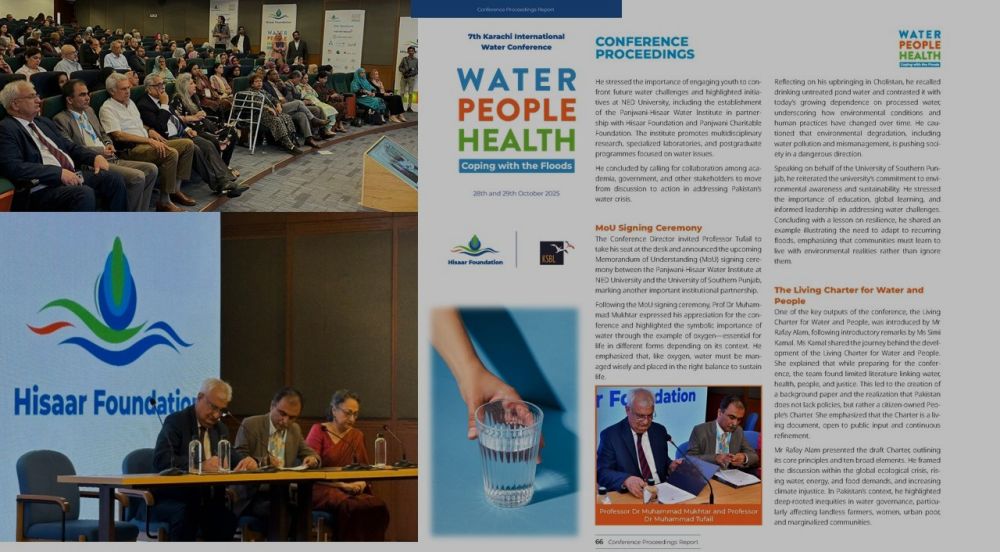
Prof. Emeritus Dr. Muhammad Mukhtar, Rector of the University of Southern Punjab, Multan, Pakistan stressed the importance of creating clear pathways between research funding, prototype development, industrial testing and commercialization. He particularly mentioned the American National Institutes of Health funding mechanisms, Small Business Innovation Research (SBIR) and Small Business Technology Transfer (STTR), which have well-established rules and regulations like these funding mechanisms. The discussion also highlighted the value of collaboration among universities, technology enterprises and businesses in helping promising innovations reach their intended users.
The webinar further highlighted Ignite’s wider innovation ecosystem, which includes digital skills development, support for university final-year projects, national incubation centers and startup acceleration initiatives. Ignite also said it was redesigning its final-year project funding program, with proposed support potentially increasing from Rs. 100,000 to Rs. 1 million per project, subject to approval in the coming days, followed by a formal launch.
A strategic opportunity for Pakistan’s research community
The launch of SPARK and ELEVATE comes at a time when universities face mounting pressure to demonstrate that research can deliver practical benefits beyond academic publications. By linking funding to prototypes, industrial engagement, intellectual property development, and commercialization, the programs aim to strengthen the connection between knowledge creation and economic value.
For Pakistani universities, the opportunity extends beyond securing research grants. It offers a chance to build stronger industry-academia partnerships, foster multidisciplinary research, support technology-based entrepreneurship, and prepare graduates to contribute to an innovation-driven economy.
The success of the initiatives will ultimately depend on the quality of proposals, the strength of partnerships, and the ability of funded projects to deliver useful technologies and sustainable commercial outcomes. For researchers and entrepreneurs with promising ideas, SPARK and ELEVATE offer two distinct pathways to move innovations from the laboratory to practical application and the marketplace.