Former Pro-Rector Donates Lifelong Collection to University of Southern Punjab, Enriching a Legacy of Learning
Posted 2 months ago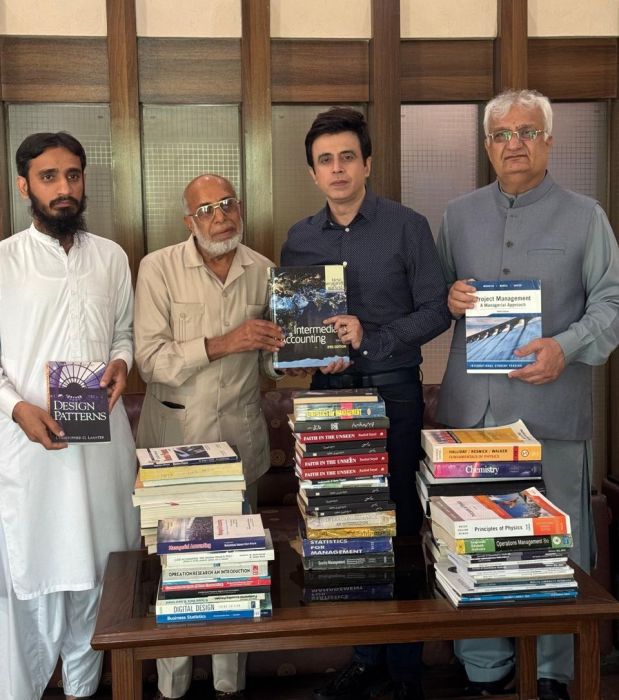
174/2026
In a gesture that celebrates scholarship over possession and knowledge over time, Professor Dr. Hayat Awan, former Pro-Rector of the University of Southern Punjab (USP), Multan, has donated a remarkable collection of books from his personal library to the University's Central Library. The contribution, comprising volumes accumulated over decades of teaching, research, and academic leadership, is expected to become an enduring intellectual resource for generations of students and scholars.
The donation represents far more than an expansion of library shelves. It symbolizes the passing of wisdom from one generation of academics to the next, reinforcing the University's commitment to cultivating a culture of inquiry, research, and lifelong learning.
Receiving the collection on behalf of the University, Mr. Saqib Nazir, Director General/Registrar, University of Southern Punjab, paid glowing tribute to Professor Dr. Hayat Awan's distinguished services. He described the former Pro-Rector as an exemplary academic leader whose unwavering commitment, integrity, and vision played a pivotal role in the University's growth and transformation.
"Professor Dr. Hayat Awan has served the University with exceptional dedication and distinction. His contributions to the academic development and institutional uplift of the University of Southern Punjab, Multan will continue to inspire future generations. This generous donation reflects his lifelong devotion to education and his enduring belief that knowledge grows when it is shared."
The Rector of the University of Southern Punjab, Prof. Dr. Muhammad Mukhtar, also expressed profound appreciation for the generous contribution, describing the donated collection as "a treasure trove of knowledge" that will enrich the University's intellectual landscape.
Prof. Dr. Mukhtar, widely recognized for his deep love of books and unwavering advocacy for reading as the foundation of innovation and leadership, emphasized that great universities are built not only through modern infrastructure and advanced technologies but also through vibrant libraries that nurture critical thinking and scholarly excellence.
"This extraordinary collection is truly a treasure trove for our students, researchers, and faculty. Every great book carries the experience of its author across generations, and every library is a gateway to new ideas and discoveries. Books remain humanity's greatest companions, shaping minds, inspiring creativity, and preserving civilization's collective wisdom. Professor Dr. Hayat Awan's generous gift will continue to illuminate countless academic journeys for years to come."
He further noted that the University's vision extends beyond producing graduates; it seeks to cultivate thoughtful leaders, innovators, and researchers who appreciate the transformative power of knowledge. Donations of personal scholarly collections, he added, strengthen the University's academic heritage while fostering a culture where intellectual generosity becomes an enduring institutional value.
Faculty members, librarians, and students welcomed the donation with enthusiasm, observing that the collection reflects decades of scholarly pursuit and intellectual curiosity. Many described the gift as a priceless investment in the University's future, one that will inspire students to explore ideas beyond the classroom and engage more deeply with research.
As universities worldwide strive to balance digital innovation with timeless scholarship, the donation by Professor Dr. Hayat Awan serves as a powerful reminder that while technology changes the way knowledge is accessed, books remain the enduring pillars of education. At the University of Southern Punjab, this generous contribution will stand not merely as a collection of volumes, but as a lasting legacy of academic excellence, generosity, and an unwavering belief in the transformative power of learning.