A Culture of Excellence: How the University of Southern Punjab Is Redefining Academic Accountability
Posted 1 month ago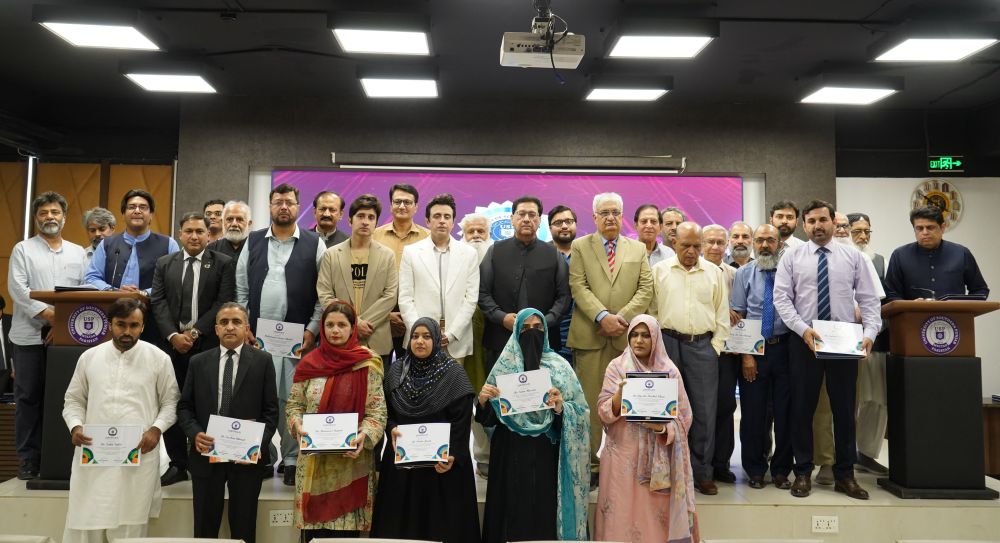
142/2026
Guided by the vision of the Chairman of the Board of Governors, Mr. Asim Nazir Ahmad, the University has introduced an extensive, evidence-based faculty evaluation framework that places teaching quality, research productivity, student engagement, and professional development at the center of academic life. Rather than relying on subjective impressions or isolated indicators, the framework integrates multiple dimensions of academic performance into a comprehensive assessment model, reflecting the University's institutional commitment to continuous quality enhancement.
The initiative reflects a broader shift across higher education worldwide. As universities face rising expectations for accountability, student success, and societal impact, the role of faculty evaluation is evolving from an administrative exercise into a strategic instrument for institutional excellence. USP's framework recognizes that outstanding teaching is not defined by classroom performance alone. It is cultivated through consistent attendance, meaningful student engagement, rigorous course preparation, scholarly research, institutional service, and a sustained commitment to personal and professional growth.
Under the newly adopted model, faculty performance is evaluated using carefully weighted criteria, including student feedback, research publications, course documentation, academic leadership evaluations, institutional service, and professional development activities. The framework is designed to ensure that excellence is recognized through objective evidence rather than perception, thereby encouraging faculty members to excel across the full spectrum of academic responsibilities.
The evaluation process covered approximately 200 faculty members across the University's diverse academic disciplines. The results not only identified outstanding performers but also provided valuable institutional insights into teaching standards and professional development needs. Rather than creating divisions between high and low performers, the exercise established a culture in which assessment becomes an opportunity for learning, mentorship, and continuous improvement.
Recognition is an integral part of the initiative. Faculty members demonstrating exceptional performance have been honored with Certificates of Appreciation, commemorative shields, and cash awards, reinforcing the University's conviction that academic excellence deserves both public recognition and tangible encouragement. The awards acknowledge sustained dedication to teaching, research, and institutional service and set aspirational benchmarks for the broader academic community.
Speaking on the occasion, Prof. Dr. Muhammad Mukhtar, Rector of the University of Southern Punjab, Multan, expressed his heartfelt appreciation for the meritorious faculty members whose commitment to excellence has strengthened the University's academic reputation. He noted that their achievements reflect not only individual dedication but also the University's collective pursuit of educational quality.
The Rector further emphasized that the evaluation exercise is not intended merely to identify the highest performers. Equally important, he noted, it provides every faculty member with constructive feedback and a clear pathway for professional growth. In this respect, the initiative serves as both a recognition program and a developmental framework, rewarding excellence while creating meaningful opportunities for others to improve, innovate, and advance their academic careers.
This philosophy reflects an increasingly influential understanding of quality assurance in higher education. Modern universities are finding that the most effective evaluation systems inspire improvement rather than merely record performance. Transparency, fairness, and evidence-based assessment foster a culture in which faculty members become active participants in institutional advancement rather than passive subjects of administrative review.
For students, the implications are equally significant. Stronger teaching practices, better-prepared course materials, more engaged instructors, and research-active faculty directly contribute to richer learning experiences and improved educational outcomes. The beneficiaries of such reforms extend beyond university campuses, ultimately strengthening the quality of graduates entering professional fields and contributing to national development.
The initiative also reinforces USP's growing ambition to position itself among Pakistan's leading universities by embedding quality assurance in everyday academic practice. In an era when universities are increasingly measured by learning outcomes, research impact, and societal relevance, institutional excellence can no longer rest on isolated achievements. It must be supported by systems that promote merit, reward dedication, and continually raise academic standards.
By aligning institutional policy with the Chairman of the Board of Governors' vision for excellence in teaching and learning, the University of Southern Punjab has taken a significant step toward building an academic culture in which recognition is earned through measurable achievement and improvement remains a shared institutional responsibility.
In higher education, excellence is rarely accidental. It is cultivated through leadership, sustained commitment, and the courage to evaluate performance honestly and with purpose. At the University of Southern Punjab, that culture is no longer an aspiration; it is becoming an institutional identity.