12 Bloom's Taxonomy and National Competitiveness: The Foundation of Quality Education
Posted 3 months ago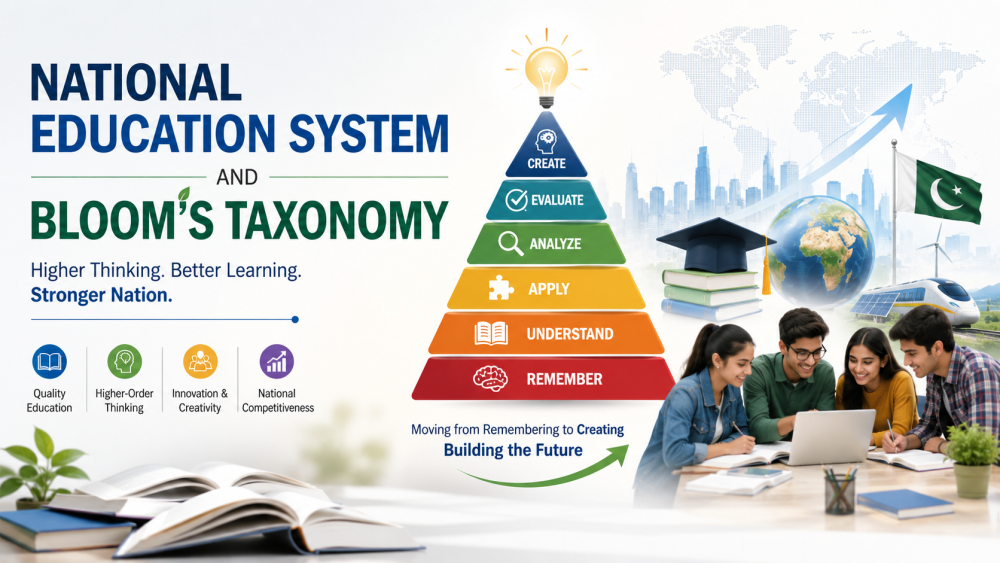
141/2026
From an educational perspective, national competitiveness is fundamentally tied to the quality of learning experiences in schools, colleges, and universities. Bloom's Taxonomy is one of the most influential frameworks for understanding and improving that quality. Educational systems that emphasize only the lower cognitive levels of remembering and recalling information often produce graduates who excel on exams but lack the analytical, creative, and practical skills modern society demands. In contrast, institutions that consistently engage students at higher cognitive levels (application, analysis, synthesis, and evaluation) cultivate learners who can address complex challenges, make informed decisions, and generate innovative solutions.
Countries recognized for educational excellence have systematically integrated higher-order thinking into their curricula, classroom instruction, and assessment systems. Their emphasis extends beyond factual knowledge to include creativity, critical thinking, collaboration, research competence, and lifelong learning skills. Such graduates become the driving force behind scientific discoveries, technological innovation, economic growth, and social development.
For this reason, improving educational quality requires more than revising textbooks or increasing school enrollment. It demands a comprehensive alignment of learning outcomes, teaching methods, classroom activities, teacher professional development, and assessment practices with the higher levels of Bloom's Taxonomy. Students should be encouraged not only to remember information but also to interpret, analyze, evaluate, and create new knowledge through inquiry, experimentation, discussion, and problem-solving.
Ultimately, a nation's future competitiveness depends not on how many citizens are literate, but on how effectively its education system develops thoughtful, creative, and innovative individuals. Nations that invest in higher-order learning cultivate a workforce capable of adapting to rapidly changing technologies, driving scientific advancement, and sustaining economic prosperity. Thus, the widespread implementation of Bloom's higher-order cognitive levels across all educational institutions should be regarded not merely as an educational reform, but as a national strategy for achieving long-term competitiveness and sustainable development.